Taking on transcendentalism for tech
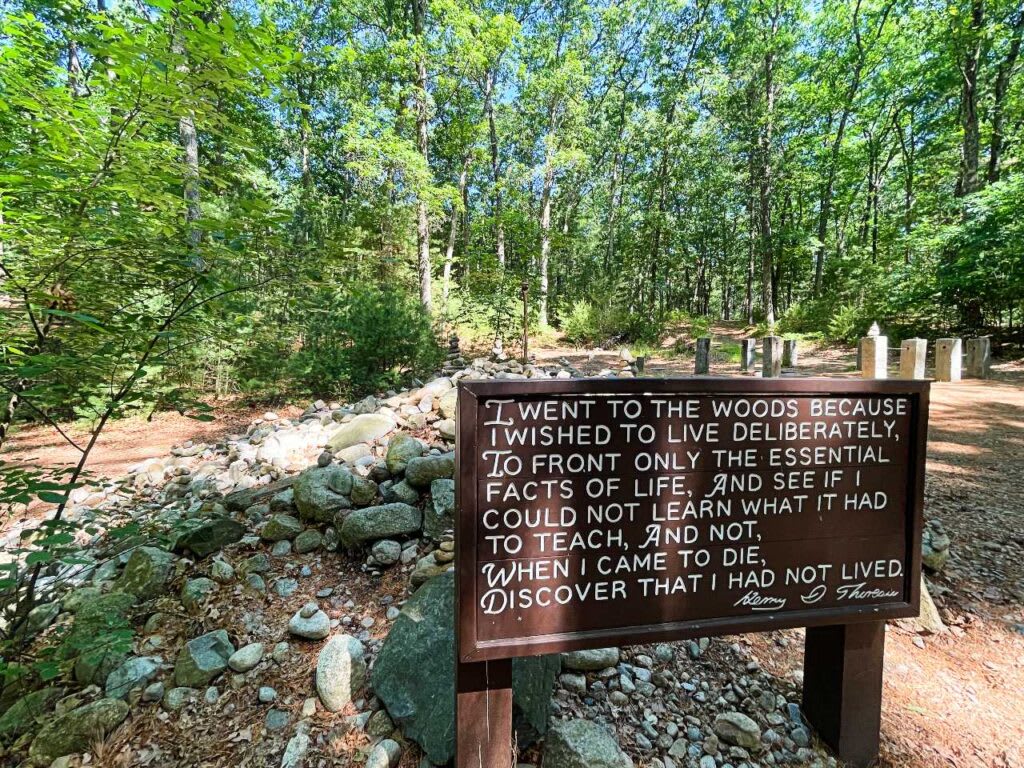
“I went to the woods because I wished to live deliberately, to front only the essential facts of life, and see if I could not learn what it had to teach, and not, when I came to die, discover that I had not lived”
-Henry David Thoreau,
Where I Lived and What I Lived For
In 1845, a time when everyone was trying to raise the next monopoly, to grow their capital, or even just achieve the ‘American Dream’, Henry David Thoreau moved to the forest in solitude. He lived off the land around him and saw nature simply and for everything it was. In 1854, he published Walden, a book about simplicity and the trappings of society. He writes of political and economic corruption, of pressures and work ethics. He sees everything for what it is and what it could be, if it weren’t so plagued by worry.
And the biggest problem he points to? Ourselves.
In his book he writes, “In the midst of this chopping sea of civilized life…that a man has to live, if he would not founder and go to the bottom and not make his port at all…he must be a great calculator indeed who succeeds”. His point? People have been coaxed into believing that they can never stop. That we have to succeed, or at least try to succeed, and will be penalized if we don’t.
He asks, “Why should we live with such hurry and waste of life?”. Why are we so determined to be burnt out before looking for a spark? Why are we so incentivized to work countless hours tonight to only save an hour tomorrow? We want to tire ourselves, and have been trained like dogs to never stop.
His words were written for 19th century men, but if you close your eyes, it seems as though his words perfectly mirror modern education. At Staten Island Tech, the halls brim with buzzing students. We frantically find and maintain extracurriculars, passion projects, internships that will hopefully allow us to stand out in the sea of thousands of college applicants. Our school schedules are full of deadlines, assessments, study plans, and college tours.
We panic about all the things we still haven’t done rather than everything that we completed. There is always another thing to do, another thing to remember and another thing to work towards. The journey seems almost endless as the destination seems to have more and more mile markers. But stopping seems sacrilegious. Rather than striving to our futures, we run from the fear of being deemed “unsuccessful”, of falling behind. How can we even fathom taking a break? Where do we draw the line?
Well, there is no simple answer. Maybe it’s not “how can we fathom taking breaks”, but more a matter of how we can slow down without feeling guilt. Maybe it starts with considering whether we’re living based on our own self-inflicted stresses, or based on the expectations of others. And this is what Thoreau stresses – individualism and simplicity.
Simplicity in the modern-day student’s life starts with slowing down. We don't need to stay up all night to study for a test, only to fall asleep when the adrenaline wears off. We don't need to apply to twenty, or ten, or even just one internship, because our resumes are already saturated with overwork. We don't need to be carrying around six colors of highlighters, only to never use one. When was the last time we went on a walk in the cold air without having somewhere to be? When was the last time we spent a day off of our email notifications or Google Classroom? When was the last time our eyebrows unfurrowed and our shoulders relaxed?
Thoreau’s critique isn’t simply just a critique, but a sign to pull ourselves away from the noise, rush, and pressure to succeed. If we always have our noses buried in class notes or AP classroom then we might miss the flowers blooming or birds flying by. If we’re in such a rush to manufacture a passion prioject, then we might miss all the beautiful, fleeting, sunsets infront of us. Slowing down doesn’t mean a waste of time and discard of ambition, but a revitalization of self-sufficiency and deliberate living.