Another year has passed, and 2024 has definitely been a year. We’ve gotten to the point where we are getting a lot of recaps showing us what we’ve spent the past year doing: Spotify Wrapped, Youtube’s Year in Review for Music and Gaming, etc. However, not all ‘year overviews’ are like this. Since 2004, Oxford has been doing a ‘Word of the Year’, in which they take a look at all the most popular slang of that year, and decide which one had the biggest impact. This article will provide you with all 6 words chosen by Oxford, their origins, and how they have been used, so you can make a decision of your own as to what word you think should join the ranks of ‘rizz’, ‘goblin mode’, ‘vax’, and many more.
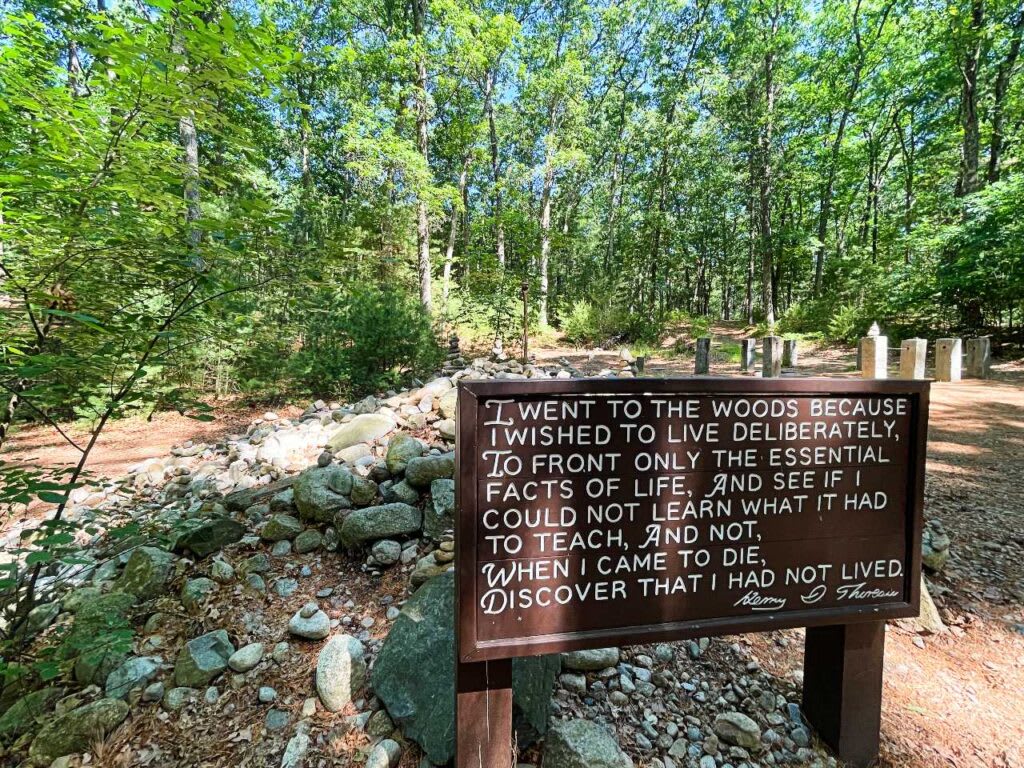
Brain Rot: Oxford defined Brain Rot as a ‘Supposed deterioration of a person’s mental or intellectual state, especially viewed as an overcompensation of material’. The word was first coined by Henry David Thoreau in the year 1854, but has grown extremely in usage the past year, typically in reference to either short-form content or popular memes/slang from the year.
Demure: Somebody who is demure is ‘reserved/restrained in appearance/behavior.’ The word originated around 650 years ago, but grew in popularity thanks to Jools Lebron’s TikTok video about how she does her makeup for work. The video garnered 54 million views and the audio from it was remixed by many celebrities, with the audio usually referring to their outfit.
Dynamic Pricing: Dynamic Pricing refers to the practice of companies adjusting the price of their products due to inflation. This practice has gone under fire recently, as despite inflation remaining around 2-3%, items, specifically groceries, have gone up more than 11%. If this word were to win, it wouldn’t be the first economic phrase with that honor. That title would go to ‘Squeezed Middle’, the 2011 Word of the Year which talks about the pressure that is put on the middle class.
Lore: While Lore isn’t a new word by any means, it’s taken a new and more prevalent meaning in 2024, basically just meaning ‘backstory’. The word has especially made waves in online media communities, especially those with continuity with each installment/episode. The word isn’t just limited to online usage, however. A person’s ancestry could be their ‘lore’. Old music from an artist you enjoy could be their ‘lore’. Really, anything with a history has ‘lore’.
Romantasy: The term Romantasy, much like how a Rom-Com is a mixture of a Romance and Comedy, is used when a piece of media has elements of Romance and Fantasy inside of it. Additionally, much like Demure, we have TikTok to thank for its widespread usage. BookTok, a popular subsection of TikTok populated by literature lovers, has exploded in popularity this year, and with it has come a rise in terms and acronyms such as PNR (paranormal relationship), OTP (one true pairing), and of course, Romantasy.
Slop: While slop is also a pre-existing word, this new definition of it refers to poorly made AI imagery/articles, typically ones that are widely spread. The New York Times defines it as a more modern version of ‘Spam’, which itself originates from a Monty Python sketch. AI has become a very controversial topic in the past year, with some saying that it will revolutionize certain industries, and others saying that it will end them.
As of writing this, not only has Oxford ended up deciding on their word of the year (they decided on ‘Brain rot’), many other dictionary/linguistic organizations have as well. For example, dictionary.com chose the word ‘Demure’, Collins English Dictionary chose ‘brat’, in reference to Charli XCX’s hit album, and Cambridge University chose ‘Manifest’, relating to a popular trend. Language is forever evolving, which can be proven from the fact that a large majority of words on this list are words that never existed before, at least in the current context we know them to be. The Word of the Year choice, while typically silly and overall insignificant, tells us a lot about the overall mood and important events of the year itself. So, who knows what word will best summarize 2025. We will just have to wait and see.
Cited Sources
“Oxford Word of the Year - Oxford University Press.” Oxford University Press, 31 Oct. 2024, corp.oup.com/word-of-the-year/.
Lebron, Jools. “TikTok - Make Your Day.” Tiktok.com, 2024, www.tiktok.com/@joolieannie/video/7399736793119247662.
MacLachlan, Matthew, and Megan Sweitzer. “USDA ERS - Summary Findings.” Usda.gov, 2024, www.ers.usda.gov/data-products/food-price-outlook/summary-findings/.
Bernard, Antonia. “Booktok Terminology Glossary – an Always up to Date Post.” Antonia Bernardin, 31 Jan. 2023, antoniabernardinblog.com/2023/01/31/booktok-terminology-glossary/.
Hoffman, Benjamin. “First Came “Spam.” Now, with A.I., We’ve Got “Slop.”” The New York Times, 11 June 2024, www.nytimes.com/2024/06/11/style/ai-search-slop.html.
Leslie, Paul. “The Origin of the Word “Spam” – and What Makes an Email Spam.” ZeroBounce Blog, 12 May 2023, www.zerobounce.net/blog/email-resources/be-a-better-marketer/the-origin-of-the-word-spam-email-spam.